
All right all, it’s myth-busting time.
When working with professionals or talking about presentations, I keep finding the same myths coming up again and again. And it makes me realize, we don’t understand public speaking very well.
It’s hard for us to understand the tips and tricks for public speaking success because most of us are too caught up in our own anxiety to recognize how to become stronger speakers.
As a result, there are so many unhelpful myths about how to give great presentations, ones that all beginners must break away from to see their speaking improve finally. Because with anything you do, awareness is the first step to creating important change.
Time to get straight with public speaking myths!
Myth #1: Strong speakers don’t feel scared.
This is absolutely not true. In fact, it burns me up every time I hear it.
Even the most accomplished, powerful, engaging speakers feel at least some level of anxiety about a significant presentation.
Yes, they feel worried, even if just a little bit.
Yes, their hands may be sweaty.
Yes, they may fumble around with their slides or the technology.
Yes, there are butterflies in their stomachs.
The difference between strong speakers and anxious ones is how they respond to those psychological and biological responses to public speaking.
Strong speakers use their body signals to bring energy to the creation of their presentation, their rehearsal, and their eventual presentation itself.
Anxious or novice speakers feel overwhelmed and afraid of their public speaking anxiety which then puts them into flight-or-fight mode.
All presenters can learn to work with their body and mind’s natural responses to the big task of giving a presentation, the key is practice.
So don’t let anyone tell you that those keynote speakers aren’t nervous, they’re just using it to their advantage instead of letting it hold them back.
The truth:
Strong speakers use public speaking anxiety as positive energy to improve their performance and preparation.
Myth #2: Some people are naturally gifted speakers and the rest of us have no chance.
Novice speakers often tell me this. They watch or listen to an amazing presentation and instantly write themselves off. I hear things like, “It’s just so easy for them, how I could I ever do that?”.
First, this hurts my heart. No matter what the activity, we can always get better at something if we work at it.
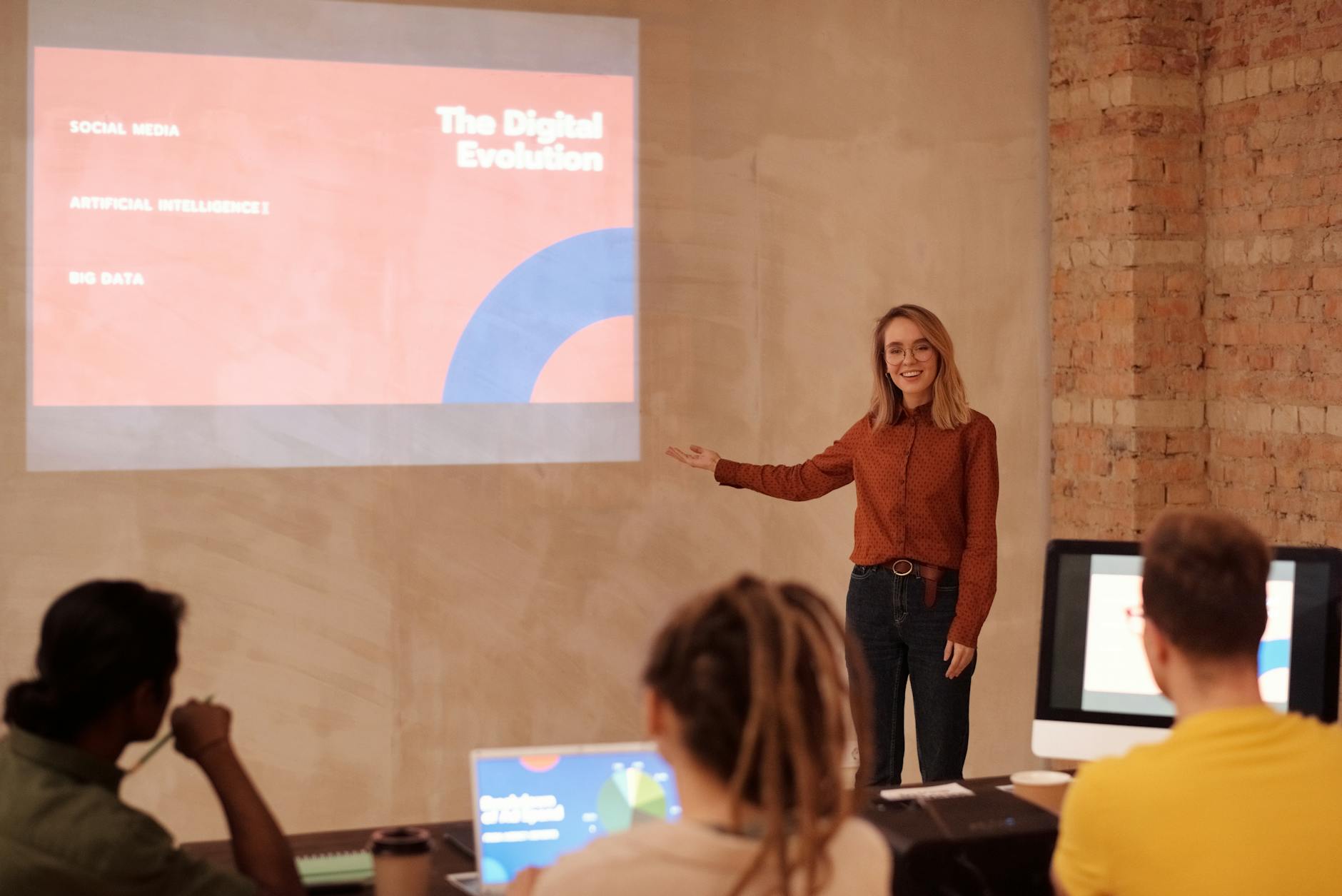
However, it is true that speaking and presenting do come more naturally to some people than others. Some people have to work harder to be amazing than others. This isn’t any different from sports, or playing a musical instrument, or writing code.
But, I hope the fact that Patrick Mahomes is close to the greatest quarterback in NFL history doesn’t stop you from playing football with your extended family at Thanksgiving.
I hope that Yo Yo Ma’s cello performances don’t stop you from grabbing the mic at karaoke night.
I hope that being clueless at Java doesn’t stop you from playing with AI.
You see, all of these “novice” versions of the expert product are valuable. They are fun, they help you solve problems, and they help you connect with others.
Public speaking does all of these things, even if you aren’t the most gifted orator. Even if you have to work hard to create meaningful presentations.
The truth is there are countless resources out there that can support your growth as a presenter – from taking online classes, to participating in community groups, you have tremendous opportunity to develop the impact of your public speaking each and every day.
The truth:
The limits of your public speaking ability and success are controlled by you. With attention, support, and repetition, you can be as good a speaker as you choose to be.
Myth #3: The best presentations focus only on what the speaker knows and believes
I can totally understand why someone would believe this, especially if you watch a lot of TedTalk videos or professional speakers.
While the best presentations often come from the speaker’s specific expertise, the best presentations align that experience with the specific needs, knowledge, and beliefs of the audience.
I’ve been there – I’ve given lectures and presentations so excited to share what I knew and what I thought the audience should learn.
But, I forgot to think about what the audience wanted to learn. What they needed to know. What they were open to hearing about.

This nuanced shift is a critical one – presentations are a gift from the speaker to the audience.
When you think about it this way, it flips the script on public speaking entirely. Rather than giving socks and vacuum cleaners that the audience should want or see the value in, speakers are challenged with giving the audience what they actually want.
Think gift cards and weekend getaways. Not dental coupons or oil changes.
The challenge for speakers is to take topics or themes that the audience may not be entirely excited about and package them in a way that aligns with the audiences’ deeper values and unfulfilled wants.
This alignment creates the opportunity for persuasion, for action, for change.
The truth:
Presentations are a gift from the speaker to the audience. Give the type of gift you want to receive.
Why is it misleading to believe these 3 myths?
Believing in these myths can hold you back from investing in developing your public speaking skills and being successful in your presenting and career. I am a firm advocate that you should never get in your own way!
And I absolutely know you have everything it takes to become a more confident and more effective speaker. You just need the right guidance to succeed in presenting well. Otherwise, you risk staying stuck where you are in your career and missing opportunities to make a difference with your audience.
Whatever you do, don’t give up!
I’ve seen hundreds of people achieve presentation success by building their confidence in themselves and aligning their message with their audience. There’s nothing mysterious or special about them.
They did it by investing time and energy into getting feedback and support through classes and trainings like Presenting Well Without Anxiety and persevering in reaching their goals.
I created this blueprint to help you visualize your path to Presenting Well and align your public speaking skills with your career goals.
Click here to download my free Public Speaking Success Blueprint so you can get started.
Updated by Andrea Hamilton, Feb 7, 2025.
Everyone has a voice. Use yours by Presenting Well.


Leave a reply to AI Can’t Help You Now: Only You Can Take Your Presentation to the Finish Line – Presenting Well Cancel reply