

Ever feel like you’re giving it your all, but your team is somehow still not reaching its potential? No matter what you do, something still feels off – relationships on the team don’t feel easy, collaboration might feel stressful or ineffective, or maybe the team struggles to meet external expectations.
You may have already brought these concerns up with the team, sought the advice of a mentor to solve the problem, or tried hoping the problem would go away, but still, things aren’t clicking along as easily as you might like.
Or, you may have seen some improvements, but the team has plateaued since then.
The truth is, leading isn’t easy. There are a lot of moving parts, and it’s easy to make mistakes, especially when you’re new in your role, your team is inexperienced technically, or you’re a leader but not a “manager”.
I’ve served on many diverse teams, always working to help groups of people get where they’re going more effectively. Whether reorganizing their units, writing new organizational objectives, or delivering high-impact products on deadline, I’ve seriously investigated how communication is both the source of and solution to nearly all leadership challenges. And in the process, I’ve seen some common mistakes crop up again and again.
I’ve even pushed too hard as a leader and had to revise my approach and repair the damage with my colleagues..
In this post, I’m sharing 3 of the biggest leadership mistakes most people make when communicating with their team. My hope is that these will help you avoid weeks of trial and error, so you can fast-track your team’s collaboration, effectiveness, and passion for their work.
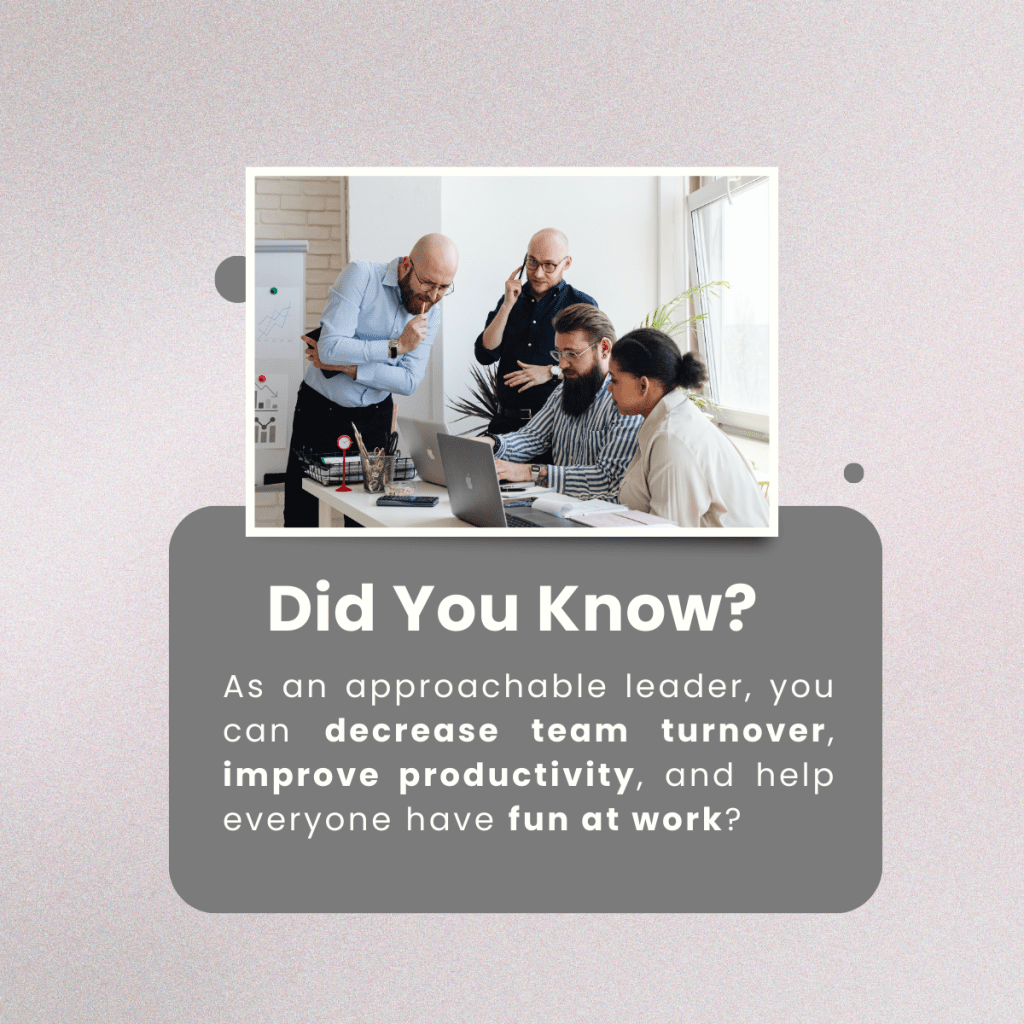
Mistake 1: You aren’t approachable.
This is an easy mistake to make – when stepping into a leadership role on a new team, or for the first time, you aren’t necessarily sure how to connect with your team. It’s easy to be too stern, serious, or somewhat aloof.
After all, as the leader, you’re the work embodiment of the sandwich generation – working to meet the needs and expectations of senior leadership, while helping people under you deliver high-quality work products to reach organizational goals.
It can feel at times like you’re serving two very different masters. And your communication in both situations might need to be very different.
Code-switching, or altering your presentation to the world based on the situation or context, is the bread-and-butter of a manager’s communication styles. With your leadership, you may need to communicate using one set of rules; with your team, another option is possible.
Where leaders often go wrong is by not code-switching – speaking to employees in the way you might in a senior leadership briefing, or other formal organizational context.
How to solve this problem:
Leave senior leadership speak in the front office. Instead, you want your team to see you as a human they can rely on to support them and come to their aid when they need it. They need you to be a person they can trust and reach out to with concerns.
- Connect through communication. Use communication styles that help create the impression you are a likable and pleasant person. Be friendly, greet everyone, check in on both work and personal life, ask questions, laugh. Be yourself; be human.
- Share about yourself in appropriate ways. They don’t need to know everything about you, but members of your team should be able to connect with you in some meaningful way. Do you share hobbies, kids, favorite vacation destinations? Find it, and talk about it!
- Communicate outside the office. Monthly, my team and I meet for breakfast before work. Sometimes the conversation flows easy and we have a great time. Sometimes people are a bit worn or more taciturn. Either way, it makes me feel happy to connect with them outside the physical office and the challenges in that environment.
If you’d like to read more about code-switching, I highly recommend this piece from NPR.
Mistake 2: You’re getting the tone wrong.
Tone as a leader is tricky. You want to be approachable (see above); you want to be respected. You want meaningful relationships with your colleagues, but you don’t want to be too close to those you supervise.
It’s common for supervisors and leaders get the tone wrong when navigating this fine line.
I’ve worked with supervisors who were overly casual, those who were stiff and aloof, and those who were warm, friendly, personable, but who were still clearly the leader.
In my experience, it is the latter that brings out the best from their team and best meets organizational goals and expectations.
When a leader is either too personal or too distant, it’s hard to generate excitement and energy from the team. Casual leaders often come across as the babysitting older siblings who don’t really push the organizational mission to the forefront and thus miss opportunities to inspire the team to reach.
Aloof leaders are not people for whom it’s easy to go the extra mile. Since they seem removed and distant, why should I devote myself to things they want me to do? While I never recommend you ask more of your team than they are able to give, you do want to encourage them to stretch when needed.
How to get the tone right:
While being approachable will help you better align the tone of your communication with your team, it doesn’t entirely solve this problem. To strike the right balance, try the following.
- Position yourself as a collaborator. When you are a helpful guide and sounding board, you automatically support your role as the trusted authority on your team, but also as a coach who wants everyone’s success to rise. Ask questions, offer solutions, pand rovide support for the challenges employees are facing in their work.
- Have clear expectations and share them. Pretty much all leadership advice talks about sharing clear expectations. One of the hardest things I’ve found is actually knowing what the expectations are, until employees fall short in some way. Take time to think carefully about what a “success” might be in a specific situation and then work backwards to develop the expectations that bound that success. Then, share these expectations as a way you are working together to reach some specific goal.
- Give feedback and suggestions for improvement. Giving feedback, especially constructive criticism, as a supervisor is a humbling experience. It feels awkward and stressful. But, I’ve found, when sitting face-to-face with someone, assume they want to improve and make fewer mistakes. You are the magical person put into their workday to help them get there. Share feedback (good or bad) from this mindset, and you’ll likely strike a natural balance between a too casual or distant leader.
For more support on how to use non-verbals to effectively communicate feedback to your team, check out the following video from ExpLearning.
Mistake 3: Communication transparency is missing (or lacking).
Transparency is another source of ambiguous leadership advice. Sure, we want to be transparent as leaders. But about what? How?
For me, transparent communication focuses on three areas: the topic of interest, why that topic matters, and challenges or opportunities inherent in that topic.
Often, transparent communication is embedded in communicating about change, but employees need transparent communication about the routine as well as the novel.
Transparent communication is open, honest, and regular. It is both a style of sharing information as well as the frequency with which those exchanges are made.
When updates are communicated clearly and are useful, but are irregular, many will report that transparency feels lacking or missing.
If updates are recurring but are not useful, transparency will also be rated low.
How to communicate with more transparency:
The flip side of transparency is vulnerability. Just as in your personal relationships, to be fully open with your team requires you to both trust them and to be proactively honest. This involves:
- Answering questions; if you don’t know, find out
- Communicating in a timely fashion – if members of the team learn pertinent information from other sources, it can erode their faith in your transparency
- Explaining “why”
- Acknowledging when news is “less than good” or just plain unwanted
If you’d like a deeper dive into how to be a more effective communicator with your team, grab my free strategy guide, where I go even deeper on each step.
Just enter your information below to download.
Wrapping it up
If you’ve been making these mistakes when communicating with your team, it’s not your fault. Most of us are never taught well how to be a supervisor, let alone a confident and effective one.
Once you’re aware of the issues poor team communication can cause, you can start making the changes you need to be more effective as a team and have a lot more fun.
In fact, by reading this post, you’ve just taken a huge step toward doing that. High-five!
If you want my help strengthening communication with your team, I invite you to reach out for a communication strategy session.
Together, we can diagnose any problems or challenges you’ve found in communicating with your team and create a custom action plan to help your team achieve new goals and succeed together.
It provides even more details on the topics discussed above and can become a powerful tool in rethinking your communication with your team.
Click here to contact me today!
Cheers,
Andrea

Leave a comment